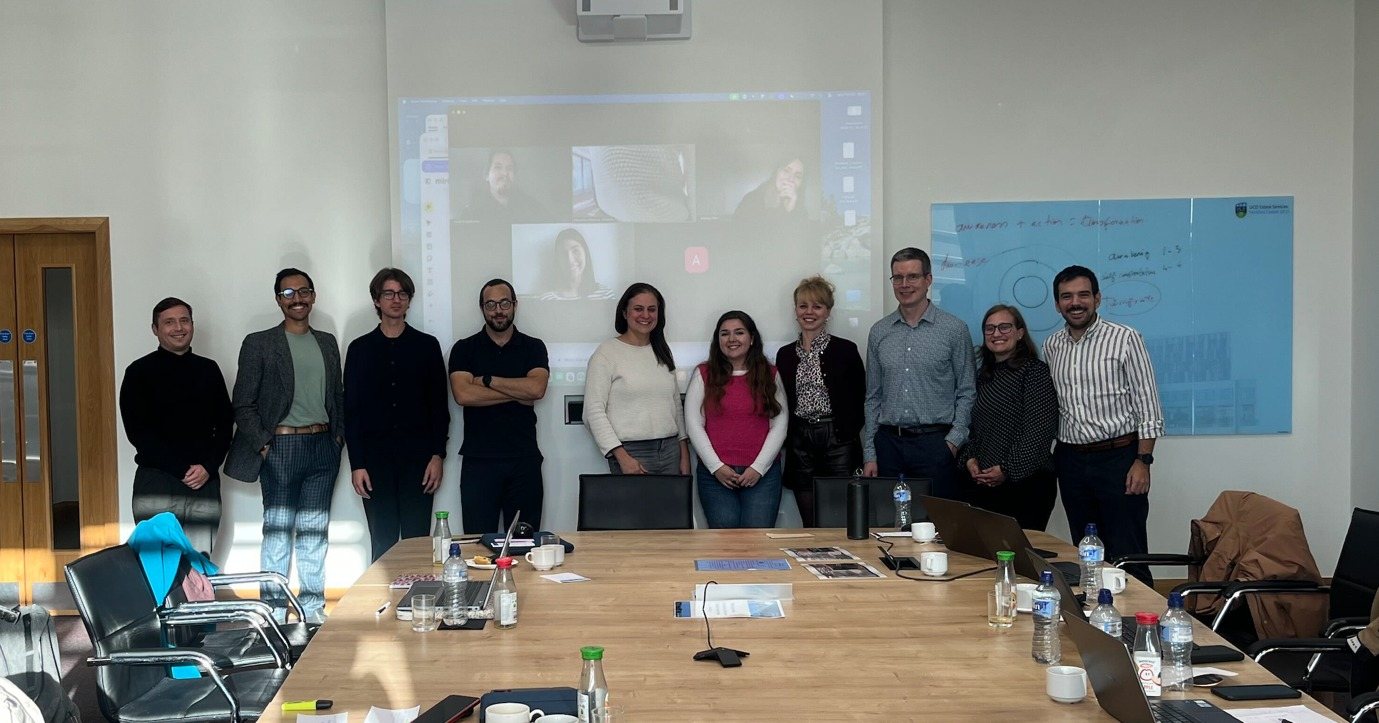
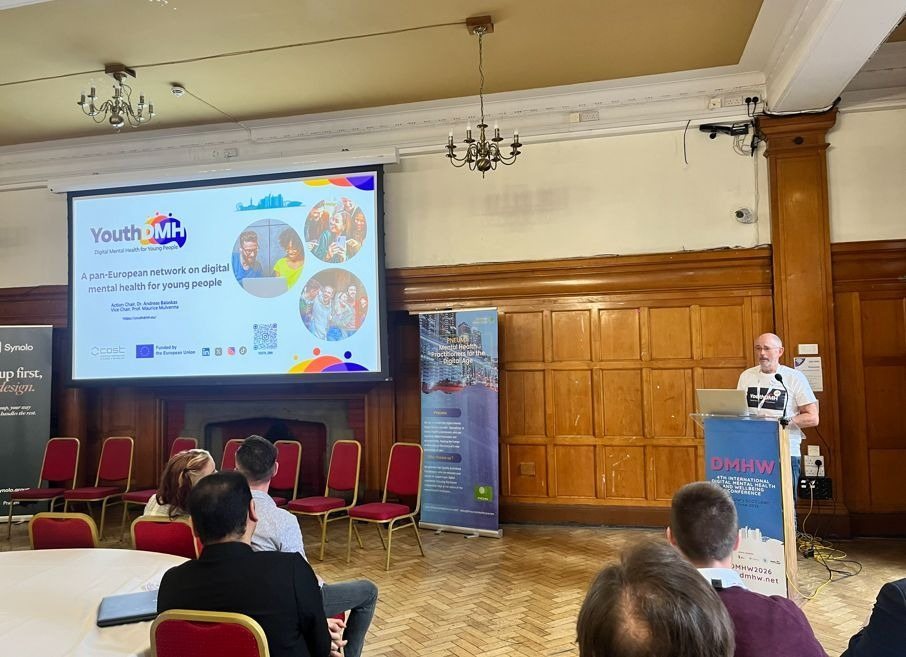
Members of Working Group 2 (WG2) of the YouthDMH COST Action met at University College Dublin on 19 October to review progress, strengthen collaboration and advance the development of key Action deliverables.
Throughout the year, WG2 has combined stakeholder engagement, participatory workshops and scientific research to explore how digital technologies can better support young people’s mental health, particularly in relation to help-seeking.
From stakeholder engagement to co-design
WG2 has conducted three workshops to explore the design of future digital technologies for mental health help-seeking.
Two workshops were held with stakeholders during the stakeholder event in Brussels, while a third brought together young students and used the Future Workshop methodology to explore their perspectives and ideas on the design of future technologies.
The materials developed through these workshops are available here.
The workshops have resulted in a report documenting their findings and outcomes, as well as the development of a prototype that will be explored further in the next stages of the Action.
Read the report summarising the workshops’ findings and outcomes here.
Developing resources and advancing scientific knowledge
Beyond the workshops, WG2 has been working on several resources and scientific outputs to strengthen knowledge in digital mental health.
The WG2 task forces have developed a repository mapping existing projects in digital mental health for young people. This resource brings together information on relevant initiatives and is available here.
WG2 has also contributed to scientific research examining the digital mental health landscape in Europe. The review paper “Digital Mental Health Apps for Young People in Europe: A Systematic Cross-Country Analysis” has been published. Drawing on data from app stores across seven European countries, the study systematically examines differences in the availability of digital mental health applications.
In addition, the umbrella review “Best Practices and Minimum Standards for Promoting Help-Seeking Using Youth Digital Mental Health Tools” is currently in press. This work contributes to identifying evidence-informed practices and minimum standards for using digital tools to promote help-seeking among young people.
Turning collaborative work into concrete outputs
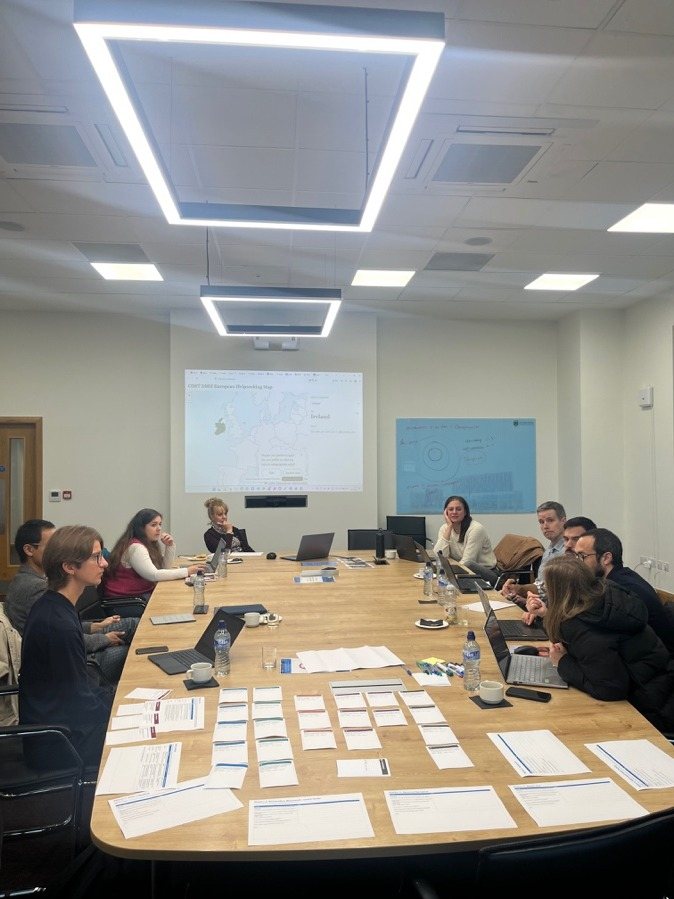
The meeting at University College Dublin provided an opportunity for WG2 members to discuss ongoing activities, exchange ideas and coordinate their contributions towards the Action’s objectives. Particular attention was given to progressing planned outputs, identifying priorities and ensuring alignment across the different strands of work.
Through these collective efforts, WG2 continues to bring together interdisciplinary expertise, stakeholder perspectives and scientific evidence to advance digital mental health and wellbeing for young people.
YouthDMH looks forward to building on this progress and further developing its resources, research outputs and collaborative activities through the continued efforts of its Working Group members.